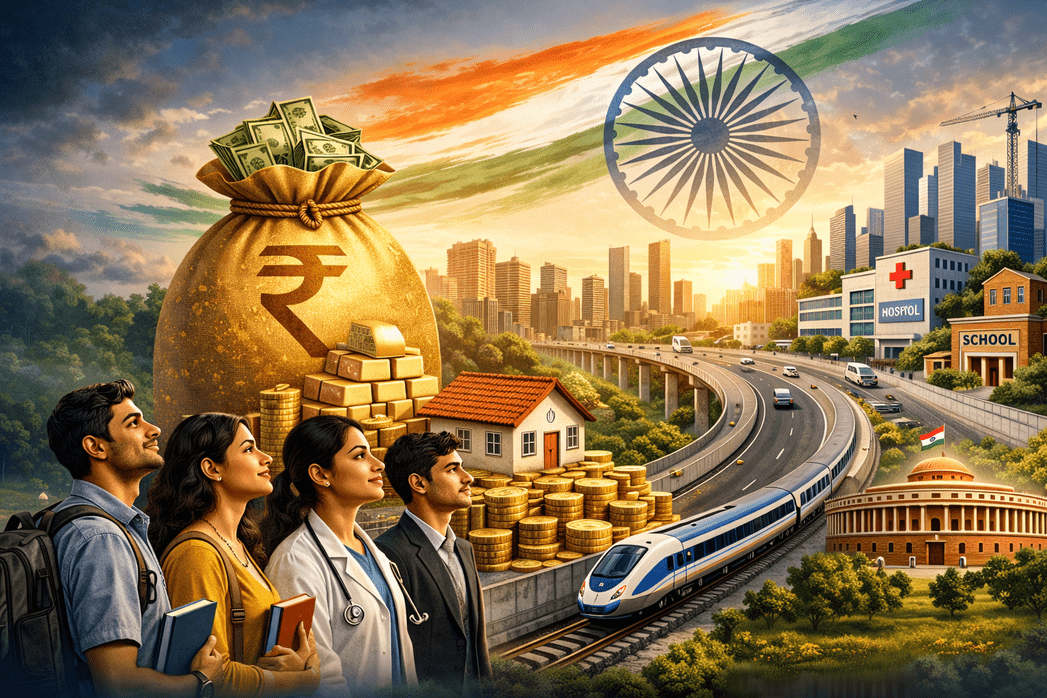
The success of IDS scheme to mop up Rs 65,000 Crs is one of the great achievement of this government. Taxation of Rs 30,000 Crs means a lot to national coffer. This money can be used to create a primary or secondary schools, multispecialty hospitals as well as upgrade the existing ones, significantly. The success also indicates that the rot lies in balance sheet of India, which has been built by avoiding taxes over these years. Many attempts have been made by successive government to garner money by these kinds of schemes but it has met with limited success and the circulation of black money has grown at much faster pace.

The government is always short of resources to meet its social obligation and the money generated by success of such scheme should be channelized in creating long term infrastructure of the country. We have long argued that India had may tax slippages which has resulted in huge circulation of black money in the country. The black money has fueled wasteful consumption as well as channelized in unproductive assets such as Real Estate and Gold, which has incremental diminishing value to the society. The exorbitant prices of Real Estate in domestic markets relative to our per capita are reflection of vast circulation of black money in the economy. I am sure readers are not surprised to know that our country also accounts for one third of gold consumption in the world.
Demographic challenges are staring at our economy
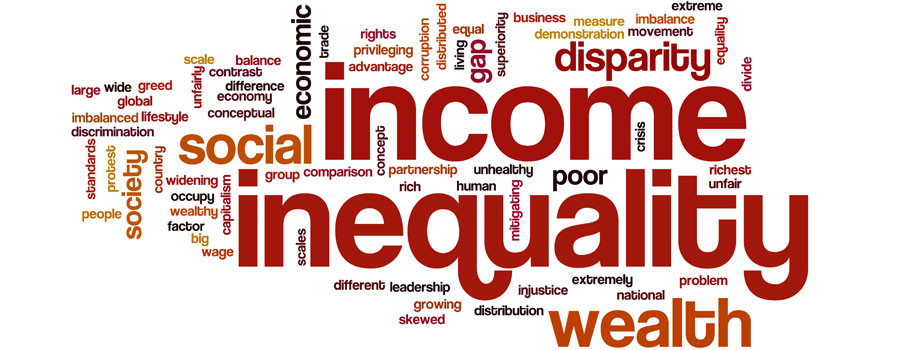
Today 50% of India is less than 35 years of age and they are aspiring for jobs and a house to build, start business etc. The artificially pegged high assets prices of unproductive assets like real estate supported by black money have created a huge divide between have and have not. For years, investors have crowded property market and state has suitably incentivized the actors to keep the property prices high due to their dependence on revenue generated by the sale of land. This has resulted in the rising mortgage payments as a percentage of household income over the past 15 years across India and all this is happening in a time of record low interest rates in the global markets. Without inherited wealth it is very difficult for younger generations to access property or decent living standard, simply because they only have their labor income.
The measure of inequality is not well understood by the government. It is reflected on the balance sheet not in Profit and loss account of the households. Incidentally, most of the government measures of tax collection are directed towards taxing profits or tinkering with tax rates to generate personal tax from salaried class, rather taxing balance sheet of households. In last budget, government surrendered wealth tax in favor of some surcharge on higher slabs of income. Today the modern day data and tools by IT department are equipped to track and tax the balance sheet of India. The digitization of land records has ensured that we will have full assessment of ownership of land by individuals. A simple idea can change the fortune and shorten time frame of progress to a developed nation.
The success of IDS should prompt government to tax Balance Sheet of Indian
We need to introduce progressive tax on wealth over a certain level; and we at Vallum capital, propagated this idea in March 2016. This means that each year we have to return to society a very small percent of our net worth to good cause of society. This can be achieved by implementing a small tax of 15 bps on net worth of a household above a certain threshold. I have carefully used world household not individual to make definition wider enough. The tax structure should be homogeneous in all the asset classes.

Taxing Balance sheet, which has been built over last three decades by avoiding taxes will result in huge sum of money in government coffer (Approx Rs 85,000 Crs. p.a.) which will help reduce government borrowing by 20-25% p.a. This will lead to structural reduction in interest rate by 100-150 bps with spiral impact on servicing of outstanding public debt of Rs 69,00,000 Crs. This has far reaching consequence on public financing and the economy as a whole. The resultant reduction in interest rate will ensure that India will usher in creation of world class infrastructure thorough domestic savings, resultant boom in the equity markets and availability of credit to many social projects which can become viable at lower cost of capital. We will be able to deflate the inflated balance sheets submitted to banking system and avert the crises, seen today. Along with this government should introduce a nominal 5% long term tax on equities, increase Securities Transaction Tax (STT), abolish sec IT Act 54 F which give lee way to ultra HNIs to disguise income by buy second or third homes, introduce vacant land tax of 1% to dissuade hoarding of land and curb black money menace.
The followers of the demagogues mostly came from the old lower-middle classes, now in an unprecedented stage of frustration and fear, menaced by humiliation, dispossession and poverty. They came from provincial and traditionally non-political groups in the population, jolted from apathy into near-hysteria by the shock of economic collapse. India of our dreams cannot be built on weak financial foundation and huge economic disparity. GST will address some further circulation of Black Money. However, implementing a simple idea like this will ensure far more equality in our society.
(Manish Bhandari, CIIA is CEO and Principal Portfolio Manager of Vallum Capital Advisors, is based in Mumbai.)