 Principles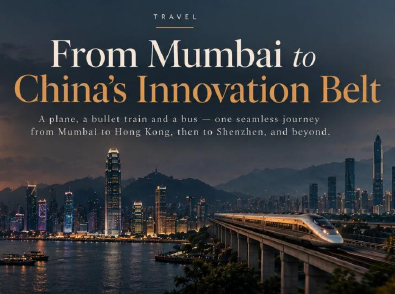
From Mumbai to Chinas Innovation Belt: what 12 days, 15 companies and 5 cities taught us.
In 2008, I visited China for the first time. There was no WeChat Pay, no iPhone, and the Beijing–Tianjin high-speed line had just opened. Eighteen years later, we went back.
Since then, Chinas economy has grown from $4.7 trillion to $19.5 trillion. High-speed rail went from a few hundred kilometres to 50,400. China now sells about 16.5 million new-energy vehicles a year, nearly half of all cars sold there.
Our key takeaways:
Execution eats strategy: Five-Year Plans work because the targets tied to officials promotions get hit, while the ones left to the market slip. Solar went from under 1 GW to roughly 1,200 GW in 15 years.
The edge is the ecosystem, not any single company: CATL, Hesai, Horizon Robotics, Alibaba Cloud, SenseTime and others share suppliers, technology and customers, and each makes the others cheaper to build. A Hesai lidar unit ships at about $200 against about $500 for the American version.
The industry gets built, but the returns often dont follow: Beijing now calls the price wars involution. Chinas 500 largest companies earn EBITDA margins of 10–14% but net margins of just 1–2%.
Pharma is the opening for India: Chinese licensing deals worth $135.7bn were signed in 2025, but only about 5% arrived as cash. The West is buying Chinas molecules. India still has the factories the West can trust, though it imports about 70% of its key drug ingredients from China.
A driverless taxi was waiting outside our hotel: It was the output of a licence, a depot network, a domestic chip supply and a patient regulator, not a gadget.Its not a one-way bet. We flag six risks: factory flight, rural loneliness, a shrinking population, youth unemployment (18.9%), thin margins and a long property hangover.
The biggest surprise: the average Chinese worker works harder than we expected. China built roads and factories.
India built a financial revolution (demat accounts up from 2.7 crore to 23.5 crore in a decade). Both have lessons for the other.Vallum Capital Advisors is a SEBI-registered Portfolio Manager. This note is for information only and is not investment advice. Please read the full disclaimer in the report
From Mumbai to China's Innovation Belt | Vallum Capital
Oct 13, 2026 Vallum Capital
Download PDFRelated Articles